

Trends of International trade serve as a linkage that overcomes those established borders by states among them. International trade accomplished its pursuit of making the world act as a small village to deliberate its industries, thereby countries trade its products & services between its peers in order to emphasize the competitive advantage principle which is the core foundation of international trade.
The expansion of the marketplace between states proliferates the traded products & its diversification as:-
- the machinery & technology, nuclear reactor & practical tools & bibliography accounted for fourth of traded goods by 32.5%.
- Cars & trucks contribute by 8.9%.
- Mineral fuels such as oil, gas, coal, and refined products accounted for 14.4% of the value of globally traded ratios.
- The plastic got 3.4%
The proportion of other industries received the following:-
- Iron & steel 2.7%
- Organic chemicals 2.6%.
- Pharmaceutical products 2.6%.
- Diamonds, pearls, and gems 1.9%.
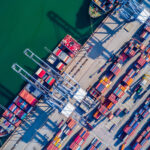
The following figure shows the most important commodities dominating the international trade market.

From 2008 to today, world exports of merchandise trade increased by 20%, and exports of manufactured goods grew at an annual rate of 2.3%, Of course, the FIFA 2018 World Cup in Russia played a role in the growth of commercial services by 12%, and on the other hand, There have been leading countries in the past 10 years, and they have also ranked first among the best traders of goods and services: “China, India, Mexico, and Ireland.”
By the beginning of 2020, growth rates are expected to rise to 6% in low-income countries, as they have in the last few years, many low-income countries have risen to join the list of middle-income countries, and have also jumped in their income levels.
Trends in international trade toward progress :-
Competition between States was created, motivated by leadership and control in the area of international trade, which has led to the selection of several fundamental trends, Which is working to grow trade significantly and rapidly, and maybe:-
- Technology transfer:
They are the basis for the diffusion of commercial technology among countries of the world, including reporting relevant knowledge to the recipient to the recipient; It also includes the transfer of non-commercial technology, such as those found in international cooperation agreements between developed and developing countries. These agreements are directly related to agricultural development or infrastructure, as well as cooperation in education, employment, and transport.
- Growth in emerging markets:
The growth of emerging markets has affected both (India, China, Brazil and other parts of Asia and South America in particular) On international trade in all ways, as emerging markets increased with the current volume and value of international trade, leading to the emergence of a whole new generation of innovative companies.
- Cooperation between States:
Countries cooperate with each other in thousands of ways through international organizations, treaties and consultations, and this cooperation may encourage the globalization of business by removing restrictions on them, so States may cooperate to obtain:
- Get mutual benefits
- Attack problems that cannot be solved alone, and work to solve them together.
- Address concerns that lie outside the territory of any person.

Trends in international trade toward progress
It allows States to acquire mutual benefits, for example, groups of countries have agreed to protect the property of foreign-owned enterprises and to reduce restrictions on the entry of foreign goods and services into their territory. In addition, countries cooperate on problems that they cannot solve on their own, such as coordinating national economic programs (including interest rates) so as to minimize global economic conditions.
Groups of States have also allowed foreign airlines to land and fly over their territory, and on the other hand, the two countries have established agreements on how to exploit commercial areas outside any of their territories. It includes outer space (such as the transmission of television programs), and landlocked areas of oceans and seas (such as mineral exploitation).
- Freedom of movement across borders:
Each country restricts the movement of goods and services across its borders, thus impeding the movement of international trade. This allows companies to benefit better from international opportunities and makes producers more efficient by competing against foreign firms, thereby providing consumers with a wider range of goods and services at a lower price.




No comment yet, add your voice below!